

Key Takeaways
- Most eye exams last 20 to 60 minutes, with routine visits often wrapping up in 30 minutes or less.
- First visits can take longer because of health history review and intake forms.
- Dilation can add up to 30 minutes, and your pupils may stay wide for up to 6 hours.
- Contact lens fittings can add 15 to 30 minutes for measurements and trial lenses.
- Filling out forms online ahead of time can save you some time.
You’re busy, so you want to know how much time to set aside before you book. The good news is that our team at Triad Eye Associates tries our best to keep an eye exam from eating up your whole afternoon. However, we also take the time to answer your questions without making you feel rushed.
Most eye exams take 20 to 60 minutes, and a routine visit often runs 30 minutes or less.
First visits and exams that include an eye dilation tend to run longer. If you’re a returning patient with no new concerns, you can usually expect a quick, thorough check.
What Affects the Length of Your Visit
A few things shape how long you’ll spend in the chair. New patients usually need more time than returning ones, since there’s more to go over on a first visit.
Your symptoms and any existing eye conditions also matter. Blurry vision, eye strain, or a history of dry eye can mean a few extra tests. Your age and family health history play a part too. Children and older adults often need closer attention, and a family history of glaucoma or diabetes can prompt additional checks.
Why First Visits Take Longer
Your first appointment includes a review of your health history and intake forms. This helps your eye doctor understand the full picture before the exam begins.
Paperwork adds time. Filling out your forms online before you arrive can save you some time in the waiting room.
What Happens During an Eye Exam?
Knowing what’s coming makes the visit feel easier. Here’s a look at what fills those minutes.
Common Tests You Can Expect
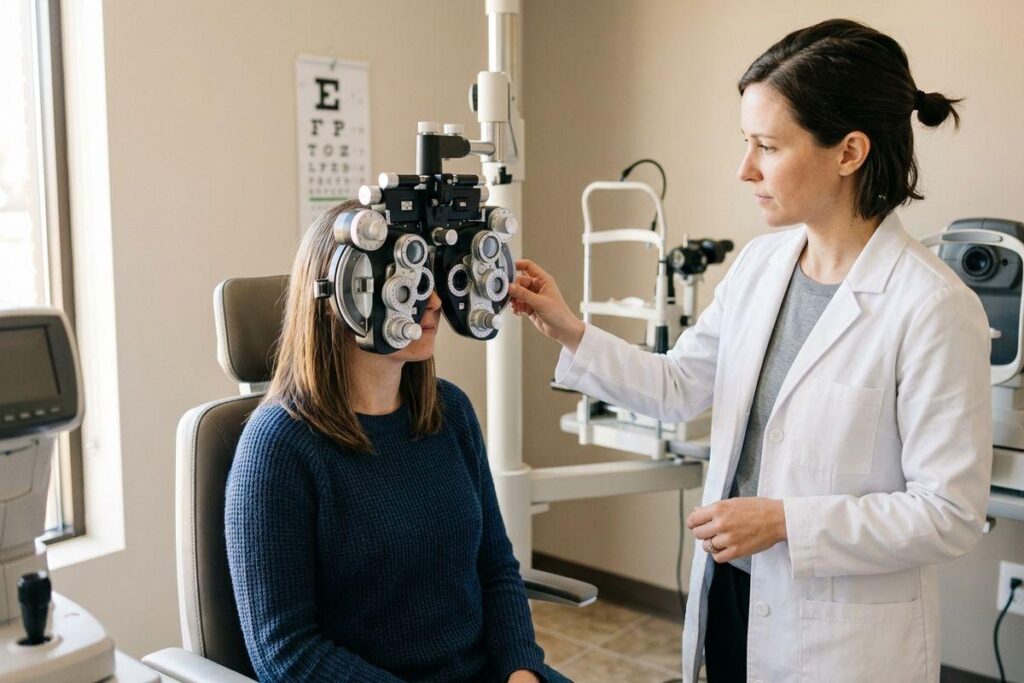
You’ll start by reading letters on an eye chart to check how clearly you see. Then your eye doctor shows you different lenses and asks which looks sharper, which fine-tunes your prescription.
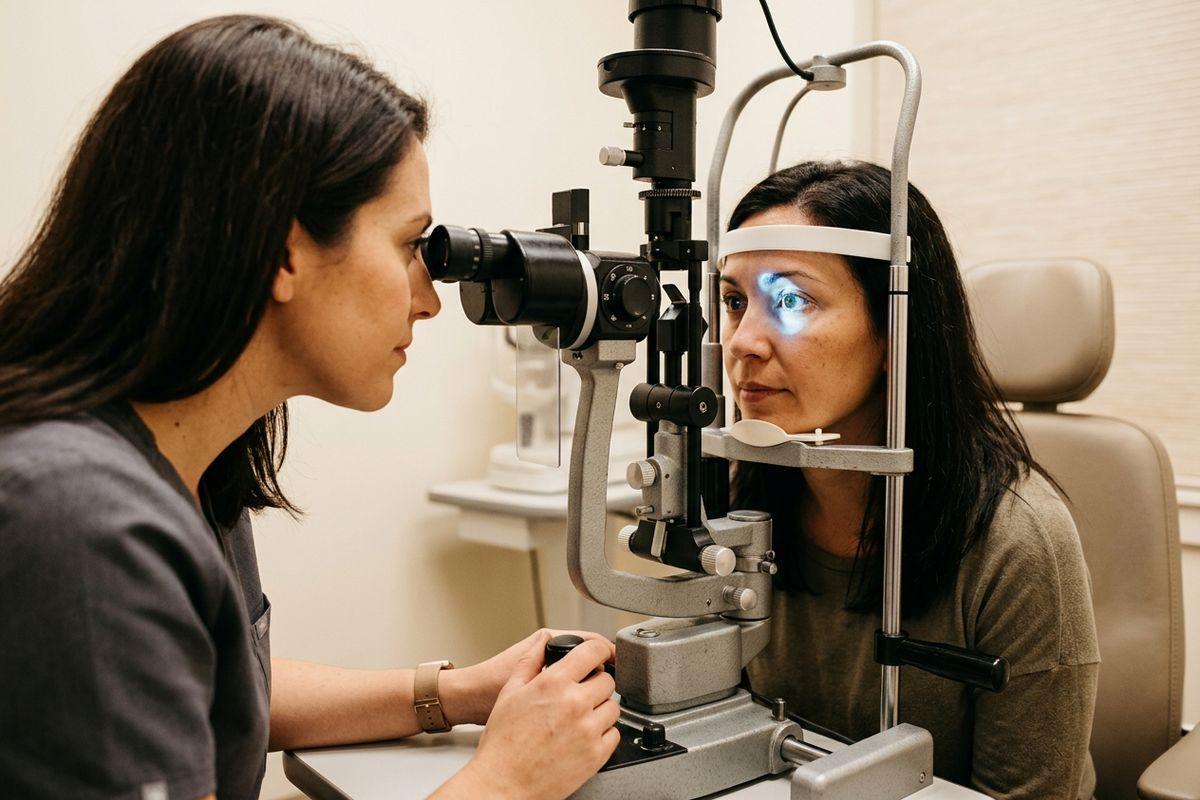
A quick eye pressure check and a slit-lamp exam, which uses a bright light and magnifier, help your eye doctor look closely at the front and inside of your eyes.
Overall Health Check
An eye exam can reveal more than just your prescription. Your eye doctor also looks for early signs of diabetes and high blood pressure by examining the tiny blood vessels inside your eyes.
The exam can also spot problems that affect your daily comfort, such as cataracts, which cloud the lens, plus infections and allergies. Catching these early helps you manage them, often before they affect your daily life.
How Dilation and Contact Fittings Add Time
Some parts of your visit add a little extra time but give your eye doctor a clearer view.
Dilated Eye Exams
Dilation drops widen your pupils so your eye doctor can see the back of your eye. The drops take up to 30 minutes to work, and your pupils can stay dilated for up to 6 hours.
Plan ahead for the brightness and blur that follow:
- Bring sunglasses to ease the glare on your way out.
- Your vision may feel blurry and your eyes more sensitive to light for a few hours afterward. If you’re concerned about driving while your eyes adjust, consider arranging a ride home.
Contact Lens Fittings
If you wear or are interested in contact lenses, a fitting can add 15 to 30 minutes to your exam time. Your eye doctor measures your eyes and has you try trial lenses to check the fit.
A follow-up visit checks comfort and how the lenses settle on your eyes. This helps you find a pair that feels right all day.
How to Prepare for Your Appointment
A little prep helps your visit go smoothly. Bring your current glasses and contacts so your eye doctor can review what you’re using now.
Make a short list of your medications and any family eye history. Try to avoid heavy screen time right before your visit, since tired eyes can affect your results.
What to Expect After Your Exam
If you order glasses, they’re often ready in 7 to 10 days. Our optical team can help you pick frames that match your style and daily routine.
If your pupils were dilated, rest your eyes and keep your sunglasses handy until the brightness fades.
Come See Us
Ready to book your next eye exam? Triad Eye Associates welcomes you at our 4 locations across the Triad, serving as your eye care team in Greensboro, Archdale, King, and High Point. Schedule your visit today and give your eyes the care they deserve.